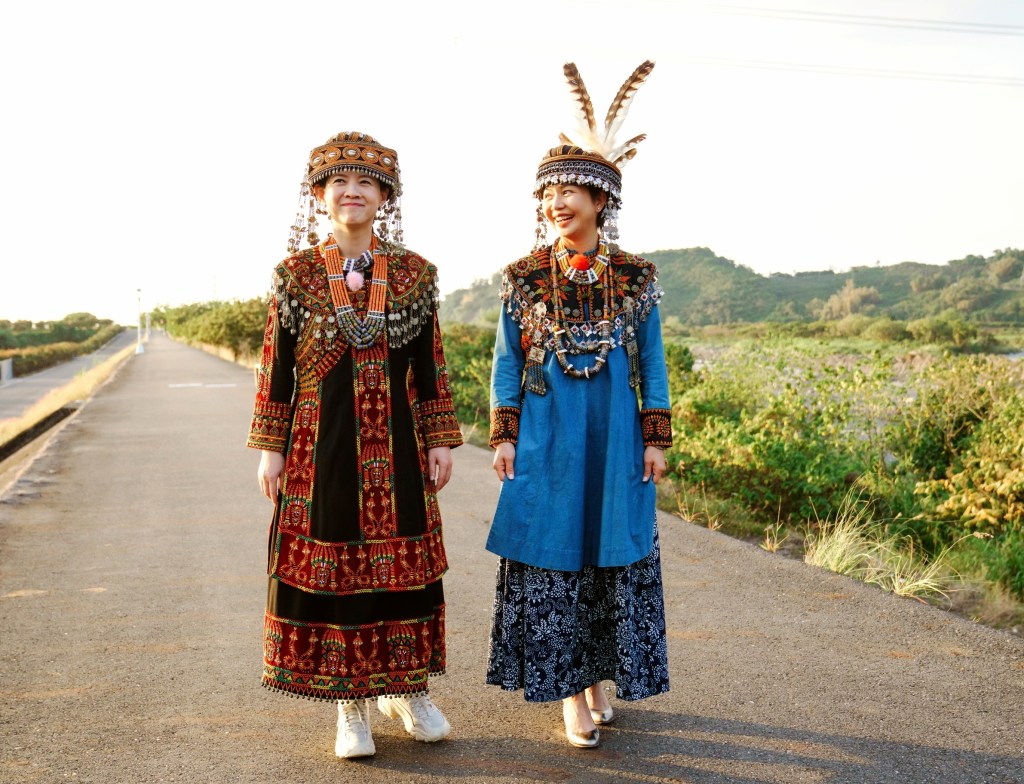
The Paiwan Tribe, known as 排灣族 in Mandarin, is one of Taiwan’s prominent indigenous groups, comprising roughly 17.8% of the island’s indigenous population. With an estimated 95,000 members, the Paiwan are the second-largest indigenous group in Taiwan, predominantly residing in the southern region of the island, particularly in Manzohou Township, Pingtung County, an area within the scenic and famous Kenting National Park.
The Paiwan society is intricately organized, linking politics, marriage, religion, and art to family names and clans, and maintaining a strict social hierarchy. Their culture is deeply connected to agriculture, with farming, hunting, and gathering forming the core of their economy. Staple crops such as foxtail millet, upland rice, sweet potatoes, and taro are central to their diet, complemented by meat from hunting and betel nuts, which play a key role in social rituals.
Paiwan clothing reflects their social status, with elaborate patterns and totems distinguishing noble families. Traditional male attire includes long-sleeved shirts with circular collars and kilts, while women wear circular-collar robes with panel skirts, leggings, and elaborate headwear.
The Paiwan are celebrated for their artistic skills, particularly in carving, weaving, and pottery. Their wooden and stone carvings often feature motifs like the hundred face viper, symbolizing their respect for ancestral spirits. The “Three Paiwan Treasures” — pottery pots, glass beads, and bronze knives — are of significant cultural and symbolic importance.
The Paiwan’s architecture is notable for slate houses built on trapezoidal platforms. Noble families often have spacious front yards and stone-stacked altars dedicated to ancestral worship.
Religiously, the Paiwan practice a blend of traditional beliefs and Christianity, with shamans or priests performing rituals to communicate with ancestral spirits and gods. Their cultural practices include supernaturalism, and key ceremonies such as the Millet Harvest Thanksgiving Festival and the Five-Year Ritual underscore their values of gratitude, community, and spiritual connection.
Socially, the Paiwan follow a system of first-child succession, where the eldest inherits family property and responsibilities. Chiefs hold a high status, managing the tribe’s welfare and resources, while there is a clear hierarchy among nobles, officials, and commoners. Despite historical challenges and governmental interventions in the 1960s aimed at altering their cultural traditions, the Paiwan have maintained their cultural identity. Their resilience and vibrant traditions continue to enrich Taiwanese society, bridging their ancestral heritage with modernity.
References:
Indigenous Peoples Cultural Development Center. (n.d.). https://en.tacp.gov.tw/Indigenous/ItemDetail?ID=eadc0c5d-dd0c-4031-a1a2-af085c9b71b4
Learn about the indigenous Paiwanese tribe, their history, and culture. (n.d.). [Video]. Encyclopedia Britannica. https://www.britannica.com/video/188804/food-culture-people-Taipei-mountains
Peoples, W. S. O. C. O. I. (n.d.). Paiwan. https://www.cip.gov.tw/en/tribe/grid-list/E8D1B17F6A81D678D0636733C6861689/info.html?cumid=D0636733C6861689
 Taiwan - The Virtual Museum